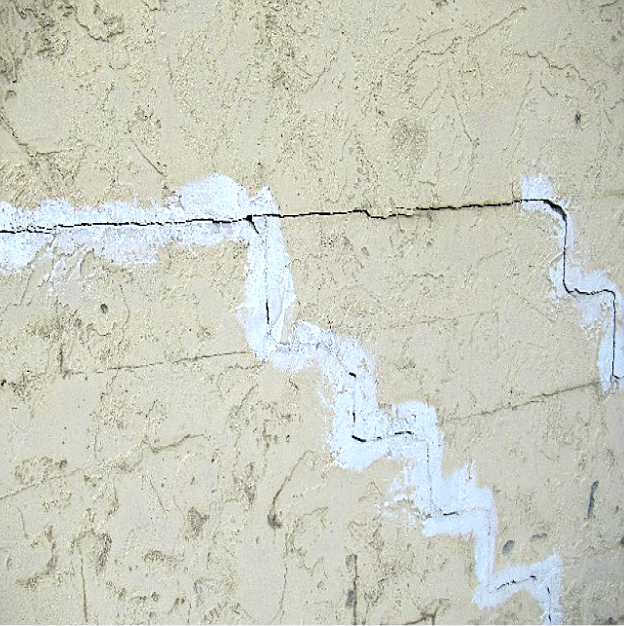
PHOTO SHOWS → Classic step cracking with failed patch:
active structural movement + water intrusion pathway → High risk of progressive wall failure.
What You Are Looking At
- Stair-step / zigzag cracking that follows mortar joints in block or stucco-covered CMU walls
- Prior cosmetic patching (white coating/caulk) that has re-cracked or peeled
- Crack segments in multiple directions, some exceeding ~¼ inch in width
Why This Is a Serious Concern
- A primary indicator of differential foundation settlement or lateral structural movement
- Opens direct channels for rainwater intrusion, leading to mold, interior damage, and corrosion of reinforcing steel
- Cosmetic patches do not stop movement and often worsen water intrusion
- Can progress toward major wall displacement or localized collapse if the cause is not corrected
Good Condition (Acceptable)
- Walls flat and uniform with no visible cracking
- Stucco/paint intact with no bulging or staining
- Only minor hairline (<1/16") shrinkage cracks typical of normal curing
Fix Needed — HIGH PRIORITY (Engineer Recommended)
- Any stair-step or diagonal cracking along mortar joints
- Cracks ≥ ⅛" wide, widening, or extending through prior patch material
- Cracks that continue through corners of windows/doors
- Multiple cracks on the same elevation indicating structural displacement
Corrective Actions & Recommendations
- Immediate:
Engage a licensed structural engineer to assess foundation and wall movement. - Temporary Control:
Remove loose patch material and apply polyurethane or epoxy crack-injection sealant to limit water intrusion. - Permanent Repair:
Engineer may recommend drainage corrections, helical piers, underpinning, slab stabilization, or full foundation repair depending on severity. - Ongoing Monitoring:
Install crack monitors, measure/document width every 6 months, and re-inspect after major rain events or new wall movement.
Report Wording Suggestions
Good:
“No step cracking observed. Wall surfaces intact and performing as expected.”
Fix Needed – High Risk:
“Step cracking observed with evidence of failed patching. Indicates active structural movement. Recommend structural engineer evaluation within 7 days and corrective foundation repairs per engineer specifications. Temporary sealing advised until permanent repairs are completed.”
LCA Certified Inspector Motto
"See it. Measure it. Photo it. Rec it"
Disclosure
This card highlights common indicators of structural movement and potential wall failure. Requirements for evaluation and repair vary by local building code, foundation type, soil conditions, and engineer findings. Always confirm local code requirements and consult a licensed structural engineer when movement is suspected.