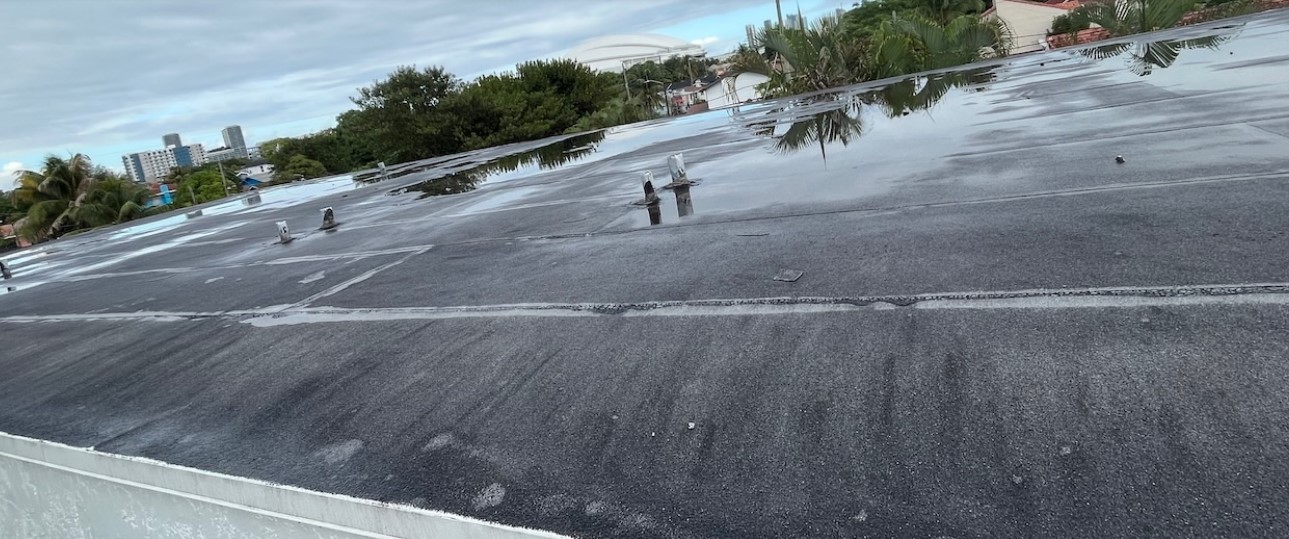
PHOTO SHOWS → SEVERE PONDING
→ Multiple large puddles long after rainfall → Submerged drains and low areas → Accelerated membrane deterioration and leak risk
What You Are Looking At
- Low-slope or flat commercial roof (modified bitumen, BUR, single-ply, foam, etc.).
- Standing water remaining in roof depressions, near drains, or across wide areas.
Why This Is a Serious Concern
- Water standing longer than 48 hours (industry standard threshold) adds ~5 lbs per sq ft per inch of depth, increasing structural load.
- Accelerates:
- membrane blistering and cracking,
- insulation saturation,
- fastener/backout failure,
- leaks into interior spaces, and
- potential ponding-related structural instability (IBC 1607.11.2.1).
- Ponding is a major cause of early roof failure and water-damage losses.
Good Condition (Acceptable)
- Roof dries within 48 hours of rain ending.
- All roof drains, scuppers, and gutters are clear and flowing.
- No visible sags, depressions, or “birdbaths.”
- Positive slope maintained (industry best practice: ¼ inch per foot toward drains).
Fix Needed – HIGH PRIORITY (Roof Collapse / Leak Hazard)
- Standing water remaining long after rainfall (as shown).
- Clogged, submerged, or slow-draining roof drains.
- Noticeable low spots or structural depressions retaining water.
- Debris, leaves, sediment, or roofing granules blocking drainage paths.
Corrective Actions & Proper Recommendation
Immediate
- Clear all drains, scuppers, and gutters of debris.
- Remove standing water using squeegee, pump, or vacuum where feasible.
Within 14 Days
- Hire a licensed roofing contractor to:
- evaluate for substrate/insulation saturation (core tests),
- install tapered insulation “crickets,”
- re-establish positive drainage,
- add drains or scuppers where necessary.
Ongoing
- Maintain monthly roof-drain cleaning logs with photos.
- Schedule annual roof inspection, preferably with infrared moisture scanning.
Report Wording Suggestions
“Good”
“Roof surface drains properly with no ponding observed. Drains clear and roof dries within 48 hours of rainfall.”
“Fix Needed – HIGH RISK”
“Significant ponding water remains >48 hours after rain; drains obstructed and low spots present. Elevated risk of roof leaks and structural loading. Recommend clearing drains today and engaging licensed roofer for permanent drainage correction within 14 days.”
LCA Certified Inspector Motto
“Drain it. Slope it. Dry it. Rec it.”
Disclosure
This card highlights common indicators of ponding water on low-slope roofs. Requirements for roof drainage, slope correction, structural evaluation, and membrane repair vary by roof system type, manufacturer warranty, and local building code adoption. Verify applicable standards including IBC 1503.4 (roof drainage) and IBC 1607.11.2.1 (ponding instability). When ponding or sagging is observed, consult a licensed roofing contractor or structural engineer.