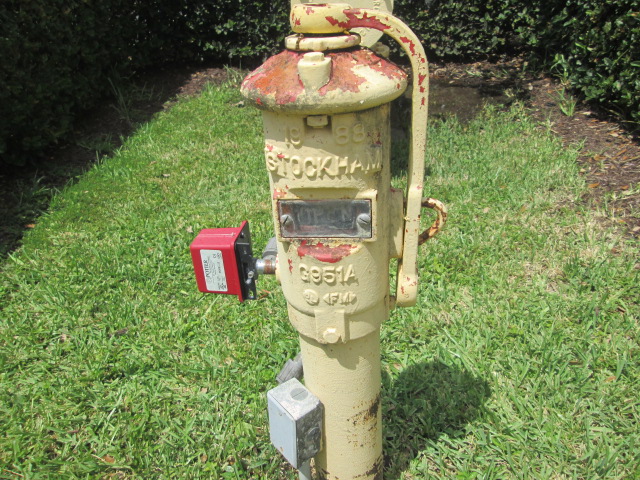
PHOTO SHOWS → Rusted, unlocked, faded PIV: tampering/accidental shut-off risk → Total sprinkler failure possible if valve is closed.
What You Are Looking At
• Post Indicator Valve (PIV) — the exterior control valve for the building’s sprinkler water supply. MeyerFire
• Painted post with small sight-window indicating valve position (OPEN/CLOSED).
• Hand wheel/handle or operating wrench (T-wrench) that should be secured in the OPEN position (locked, sealed, or electrically supervised). NFPA
• Tamper/alarm switch box that signals valve movement to the fire alarm panel.
Why This Is a Serious Concern
• Unlocked or unsecured handle — anyone can shut off the sprinkler water in seconds, disabling fire protection when needed most.
• Heavy rust or mechanical damage — a seized or broken valve may not operate when firefighters attempt to use it. Northstar Community Services District
• Faded or wrong color — reduced visibility slows identification in low light or smoke; clearly visible, contrasting color aids quick location.
• Valve closures are a leading cause of sprinkler failures — NFPA research shows a very large share of failures result from valves being shut or otherwise out of service. jonochshorn.com
Good Condition (Acceptable)
• Post painted bright, contrasting color (commonly red) and free of corrosion.
• Sight window clearly reads “OPEN”; operating wrench present and secured.
• Handle/wrench locked, sealed, or electrically supervised so movement generates an alarm.
• Current inspection/service tag visible (annual tag per NFPA 25) and no visible leaks.
Fix Needed – HIGH PRIORITY (Recommend Immediate Action)
• Rusted or corroded valve body or wheel.
• Handle unlocked, missing padlock, or no tamper supervision.
• Post painted wrong color, badly faded, or obscured.
• No operating wrench attached or wrench missing.
• No current inspection/flow test tag or evidence of lapse in testing.
Corrective Actions & Proper Recommendation
- Immediate:
• Clean light surface rust, but do not operate a seized valve in the field — secure the handle in the OPEN position (padlock, tamper seal, or alarm supervision) and attach the operating wrench to the post. - Within 30 days:
• Have a licensed fire protection contractor test/operate the PIV, perform flow verification as needed, and attach an updated inspection/service tag. If valve is mechanically compromised, replace or repair per NFPA guidance. - Ongoing:
• Maintain monthly/weekly visual checks per facility procedure and the inspection/testing frequencies in NFPA 25; ensure tamper switches are monitored and riser/PIV locations remain visible and unobstructed.
Note on location/visibility: NFPA does not universally require a fixed 40-ft setback from the building for all PIVs — installation details (height 32–40 in above grade, protection from mechanical damage, and clear visibility) are specified where PIVs are used, and AHJs may require additional setbacks/marking. Verify local code/AHJ requirements.
Report Wording Suggestions
“Good” – “PIV in serviceable condition: bright color, sight window shows OPEN, handle secured/locked, operating wrench attached, current inspection tag present.”
“Fix Needed – HIGH RISK” – “Post Indicator Valve rusted, unlocked, and faded; operating wrench missing and inspection tag expired—immediate risk of accidental or unauthorized shut-off and impaired emergency response. Recommend securing wrench and padlocking OPEN position today, arranging full valve exercise/flow test and repairs as required by a licensed contractor.”
LCA Certified Inspector Motto
"See it. Secure it. Tag it. Rec it"
Disclosure
This card highlights common life-safety concerns for Post Indicator Valves. Specific installation, color, supervision, setback, and testing requirements vary by system type, code edition, and Authority Having Jurisdiction (AHJ). Always verify current NFPA 13, NFPA 14, NFPA 25, and applicable local fire codes or AHJ directions. When in doubt, recommend immediate evaluation and corrective work by a licensed fire-protection contractor or the AHJ.