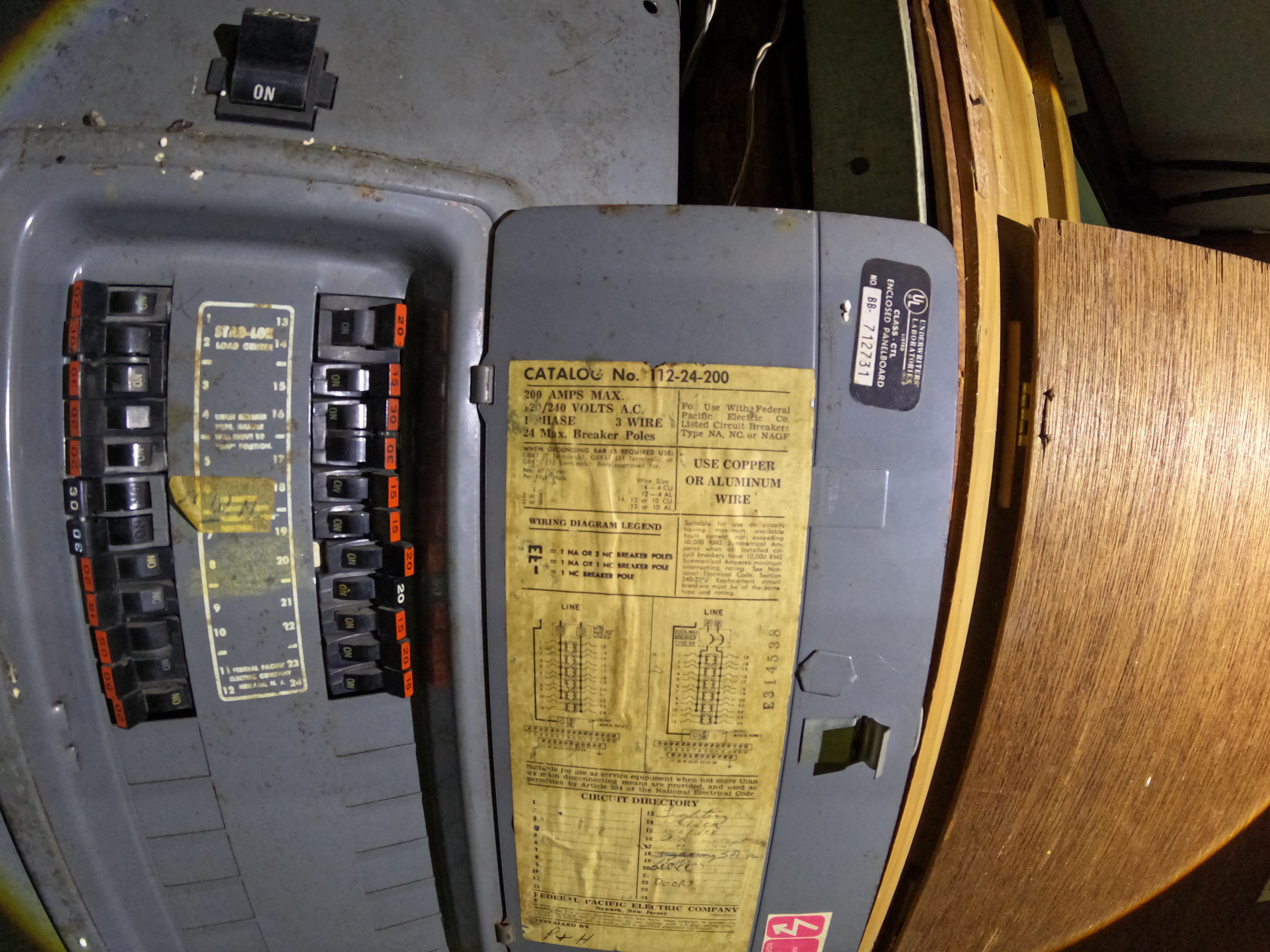
PHOTO SHOWS → HAZARDOUS FPE STAB-LOK PANEL
→ Breakers with red tabs, “Stab-Lok” labeling, aged FPE catalog sticker
→ Known breaker failure hazard → Significant fire and loss exposure
What You Are Looking At
A Federal Pacific Electric (FPE) “Stab-Lok” electrical load center (gray steel cabinet).
Identified by:
“STAB-LOK” labeling on the directory/door
Breakers with red tabs/handles
FPE catalog sticker (e.g., NB, NC, Stab-Lok Load Center)
Installed widely from mid-1950s through early 1980s in residential and light commercial construction.
Why This Is a Serious Concern
These facts are verified and accurate:
Independent engineering evaluations (Aronstein, et al.) found over 25% of Stab-Lok breakers failed to trip under UL test conditions. Some studies show higher non-trip rates.
Failure to trip means circuits can overheat, melt insulation, and ignite nearby combustibles.
The CPSC did NOT issue a recall, but stated in its closure notice that:
available data suggested defective performance,
further investigation could not continue due to budget constraints,
homeowners should consider qualified electrician evaluation.
- A 2002 New Jersey civil court ruling determined FPE knowingly fraudulently obtained UL listing, though this ruling is not binding nationally.
- NEC does NOT explicitly require replacement of FPE panels; however:
- NEC Article 110 requires equipment to be safe, listed, and suitable for continued use.
- Many AHJs and insurers interpret this to mean FPE Stab-Lok panels no longer meet safety expectations, especially when original breakers remain installed.
- Multiple major insurers classify FPE as “high-risk equipment” and may exclude fires related to electrical deterioration.
Important correction:
NEC/NFPA does not issue product-specific condemnations. Replacement recommendation comes from industry consensus, not from NEC directly.
Good Condition (Acceptable)
There is no “good” condition for an active FPE Stab-Lok panel.
For scoring purposes:
- Acceptable only if the FPE panel has been fully removed and replaced with a modern UL-listed panel.
- If FPE cabinet remains but the interior has been fully retrofitted with UL-listed Stab-Lok replacement guts (rare, expensive, and not widely available) AND inspected—still considered elevated risk, not truly acceptable.
Fix Needed – HIGH PRIORITY (Electrical Fire Hazard)
- Any existing FPE Stab-Lok panel, including the one in your photo.
- Breakers with red tabs, FPE labeling, catalog 12-24-200, “Stab-Lok Load Center,” or outdated breaker types (NB, NC, NA, etc.).
- Signs of corrosion, overheating, or loose breakers (common failure mode).
- No replacement/upgrade tag within last 12 months.
Corrective Actions & Proper Recommendation
Immediate – Same Day
Apply a clear label: “HAZARDOUS – FEDERAL PACIFIC STAB-LOK PANEL – DO NOT ADD CIRCUITS”.
Restrict access to prevent anyone from adding loads or replacing breakers.
Within 30 Days
Licensed electrician should remove and replace the entire panel with:
modern 100A–200A service (as appropriate),
UL-listed breakers,
AFCI/GFCI protection where required,
whole-house surge protection as recommended.
Post-Replacement
Document installation, attach new inspection approval, and test all circuits.
Report Wording Suggestions
“Good” (acceptable scenario) –
“No Federal Pacific Stab-Lok panel present; electrical service upgraded to modern UL-listed equipment with current inspection.”
“Fix Needed – HIGH RISK” –
“Federal Pacific (FPE) Stab-Lok electrical panel identified with red-tabbed breakers. Independent testing shows high failure-to-trip rates, creating a significant electrical fire hazard. Recommend immediate hazard labeling and full licensed replacement immiately.”
LCA Certified Inspector
“Spot it. Label it. Replace it. Rec it.”
Disclosure
This card summarizes known electrical and fire risks associated with Federal Pacific Electric Stab-Lok panels. While no formal CPSC recall exists, multiple independent tests document unsafe non-tripping performance.
Always verify electrical work with a licensed electrician and applicable NEC (NFPA 70) and local AHJ requirements. When in doubt—recommend full panel replacement.